

ECR Colloquium 2026

Days

Early-Career Researchers’ Colloquium 2026

Aberystwyth University | 29 and 30 June

Join the Learned Society of Wales’ Early Career Researchers Network for the 4th annual Colloquium at Aberystwyth University on the 29 and 30 June 2026.

The ECR Colloquium brings together researchers from across Wales and all disciplines for two half-days of networking, professional development, and collaboration. It offers a supportive, interdisciplinary space to share research ideas, receive peer feedback, explore opportunities for future collaboration, and develop skills that support research careers.

Designed in partnership with an interdisciplinary team of researchers, the programme will reflect the diverse needs and experiences of those working across Wales. This year we are working with Aberystwyth University’s Early Career Researchers Network to deliver the Colloquium. 

An optional social event will take place on the evening of 29 June, providing further opportunities to connect with fellow attendees in a relaxed setting.

Hear from attendees of the 3rd Annual ECR Colloquium about how it not only supports their own research journeys, but also contributes to strengthening Wales’ broader research culture.

Travel and Accommodation

The Learned Society of Wales is committed to minimising barriers to ensure that researchers based in Wales can access our opportunities. 

Attendance at the Colloquium is free of charge, and travel and accommodation bursaries are available to support researchers travelling from further afield. Details on how to apply for bursary support will be provided at the time of registration.

Researchers working outside of higher education institutions are also encouraged to attend the Colloquium. This might include those who are carrying out research in public, private or third sectors, as well as freelance and independent researchers. 

Please note: ECRs are expected to travel the day before the event. Accommodation will therefore be provided for the nights of 28 and 29 June. Attendees will be able to travel home on 30 June, after 2:00 pm, once the event has concluded. 

Key Dates

  • Call for Proposals Opens: 21 January 2026
  • Call for Proposals Closes: 20 March 2026, 4pm
  • General Registration Opens: 15 April 2026
  • General Registration Closes: 12 June 2026, 4pm
  • ECR Colloquium, Aberystwyth University: 29 & 30 June 2026
A women standing in front of a poster describing its content to someone off camera.
Three women at a table with a laptop and some papers in front of them.
A woman, smiling, is talking to another woman who is holding a phone in her hand.

Registration Now Open: ECR Colloquium 2026

Join us in Aberystwyth for the 2026 Early-Career Researchers Network Colloquium on 29th and 30th June, a two-day event designed to connect, support, and inspire Early Career Researchers (ECRs) across Wales and beyond. 

Whether you are looking to expand your network, share your work, or explore new opportunities, the Colloquium offers a welcoming and collaborative space to engage with researchers and professionals from across sectors. 


Why Attend?

By attending, you will have the opportunity to: 

  • Connect with ECRs, researchers, policymakers, and professionals across academia, industry, the public sector, and not-for-profit organisations 

  • Share your research through flash talks and posters 

  • Take part in interactive workshops and discussions 

  • Explore new collaborations and career development opportunities 

  • Engage with a supportive and inclusive research community 

The Colloquium will also host the Hywel Thomas ECR Prize for Research Culture and Community Leadership, celebrating Early Career Researchers who support other ECRs and contribute to a more inclusive and supportive research environment. 

We encourage attendees to consider submitting a nomination. 

Find out more about the prize by clicking on ” The Hywel Thomas Prize” tab. 

The ECR Network Colloquium is open to: 

  • Early Career Researchers across all disciplines 
  • Researchers working in academia, industry, the public sector, and not-for-profit organisations, as well as independent researchers  
  • Individuals returning to research following a career break 
DAY 1
Time  Activity 
11:30-12:00   Arrival and Registration  
12:00–13:00  Networking lunch 
13:00–14:15  Welcome, keynote session, and ECR Prize Introduction 
14:15–14:30  Break 
14:30–15:30  Flash talks 
15:30–16:00  Refreshments and networking 
16:00–17:00  Parallel Workshop sessions 
17:00–17:15  Close of Day 1 
Evening  ECR-led social activities  
DAY 2
Time  Activity 
08:45–09:15  Arrival and refreshments 
09:15–10:15  Flash talks 
10:15–10:30  Break 
10:30–11:00  Poster exhibition 
11:00–12:30  Lunch and networking 
12:30–13:30  Panel discussion 
13:30–14:30  Closing session and ECR Prize announcement 

The programme includes a mix of keynote sessions, flash talks, workshops, and networking opportunities across two days. A draft schedule for the Colloquium is provided above to assist attendees with travel planning. A finalised programme will be shared with attendees ahead of the event. 

Please note: if you have submitted an abstract for the Colloquium, you do not need to complete this general registration form at this stage, regardless of the outcome of your submission. All abstract submitters will be invited to complete a separate internal registration process, and further details will be shared directly by the Researcher Development team via researcherdevelopment@lsw.wales.ac.uk  

To register for the Colloquium, please follow the link below: 

Register here: ECR Colloquium 2026

The registration is open to anyone interested in attending the colloquium and will close on 12 June 2026, or earlier if the event reaches full capacity.  

We are committed to reducing barriers to participation. A limited number of travel bursaries and accommodation options will be available to support attendance. Priority will be given to participants who are presenting at the Colloquium and have had their abstracts accepted. To be considered, please complete the application form linked on the registration page above. Please note that attendees should not make any travel arrangements until their travel bursary has been formally approved

Keep an eye on this page — additional information on the programme and event details will be released over the coming weeks.

Please note: ECRs are expected to travel the day before the event. Accommodation will therefore be provided for the nights of 28 and 29 June. Attendees will be able to travel home on 30 June, after 2:00 pm, once the event has concluded. 

If you have any questions about the ECR Colloquium or registration, please contact: 

researcherdevelopment@lsw.wales.ac.uk 

The conference will take place at the MedRus Conference Centre, Penbryn, Aberystwyth University, Penglais, SY23 3BY.  

Click here to open directions to Aberystwyth. To access Aberystwyth University Campus Maps, please click here 

The Hywel Thomas ECR Prize for Research Culture and Community Leadership: NOW OPEN 

Please note that this prize will be awarded at the ECR Colloquium 2026, to be held at Aberystwyth University on 29–30 June.  

About the Prize

The Hywel Thomas ECR Prize for Research Culture and Community Leadership celebrates Early Career Researchers (ECRs) in Wales who are supporting other ECRs and contributing to a more inclusive, supportive, and sustainable research environment. 

Established in recognition of Professor Hywel Thomas’s leadership and values, this prize reflects a commitment to research culture that is not only excellent, but also fair, collaborative, and people centred. During his time as President of the Learned Society of Wales, Professor Thomas championed early career researchers and supported work to strengthen equality, diversity and inclusion, recognising that thriving research communities depend on the ability of all individuals to participate and succeed. 

This prize continues that legacy by recognising ECRs who demonstrate leadership through care, inclusion, and community-building — supporting others while helping to shape a research culture that is open, accessible, and equitable. 

The prize will be awarded at the 2026 Early-Career Researchers Network Colloquium in Aberystwyth Shortlisted nominees will be recognised at the event and receive a certificate. The prize winner will receive a certificate, a cash award, and formal recognition through the Society’s communications, including online and in-person channels. 

Professor Hywel Thomas is the third President of the Learned Society of Wales, taking up the role in May 2020 during the COVID-19 pandemic. He led the Society through a period of significant development, including the establishment of the Early Career Researchers Network and continued progress in advancing equality, diversity and inclusion across its work. 

An internationally recognised researcher, he is the founder of the Geoenvironmental Research Centre at Cardiff University and a Distinguished Research Professor at Swansea University. He served as a Bevan Commissioner, providing independent expert advice to the Welsh Government on innovation and improvement in health and social care in Wales. He also led FLEXIS, a £24 million project for energy systems research in Wales. He is a Fellow of the Royal Society (FRS), a Fellow of the Royal Academy of Engineering (FREng), and a Member of Academia Europaea, the Academy of Europe. 

In 2017 he received a CBE for services to academic research and higher education. In 2021, he was elected as a foreign member of the Chinese Academy of Sciences, the highest honour bestowed by the Chinese government to a foreign scientist for contributions and achievements in science and technology. In 2025, Professor Thomas received the Chinese Government Friendship Award, for his ‘important contribution to China’s socialist modernisation as well as exchanges and cooperation with other countries.’  

His leadership reflects a strong commitment to supporting research talent in Wales, strengthening community, and shaping a research culture that is collaborative, inclusive, and forward-looking — values that underpin this prize. 

The prize recognises contributions where ECRs support other ECRs and strengthen research culture and community in ways that are inclusive, collaborative, and impactful. 

This may include, but is not limited to: 

  • mentoring, peer support, or sponsorship that is inclusive and responsive to different needs and backgrounds  
  • building communities or networks that foster belonging and widen participation  
  • leadership in promoting fair, transparent, and supportive research practices  
  • initiatives that improve wellbeing and help address barriers within research environments  
  • creating equitable opportunities for development, collaboration, and visibility  
  • work that contributes to more accessible, inclusive, and sustainable research cultures  

We particularly value contributions that recognise the importance of community, shared responsibility, and the often-unseen work that enables others to thrive. 

At the Learned Society of Wales, we believe that research culture should reflect the diversity of the communities it serves. Equality, diversity and inclusion are therefore integral to how this prize is defined and assessed. 

We recognise that early career researchers experience research environments in different ways, and that barriers — whether structural, cultural, or practical — can shape access to opportunities and progression. Supporting ECRs means actively working to reduce these barriers and to create conditions in which a wider range of researchers can contribute and succeed. 

This prize values contributions that demonstrate thoughtful, inclusive approaches to leadership and community-building. This may include supporting underrepresented groups, improving accessibility, creating inclusive spaces and practices, or widening participation in research and development opportunities. 

Nominations are open to: 

  • an individual Early Career Researcher  
  • group of Early Career Researchers  

We define an Early Career Researcher (ECR) as someone who is typically within 8 years of completing their PhD (or equivalent research experience), excluding any career breaks. This includes researchers working across academia, industry, the public sector, and not-for-profit organisations. We also welcome nominations from, and for, Independent Researchers. Please note that doctoral researchers (PhD students) are not eligible for this prize. 1 

Nominees should be based in Wales or making a clear contribution to the research environment in Wales. Eligible activity may take place across academia, the public or private sector, industry, not-for-profit organisations, or through cross-sector collaboration. 


¹ If you are unsure whether a nominee meets the ECR definition, including cases where individuals may still be undertaking doctoral study alongside employment or have non-linear career pathways, we encourage you to contact us at researcherdevelopment@lsw.wales.ac.uk to discuss your situation. While doctoral researchers are not typically eligible, we recognise that individuals may still self-identify as part of the ECR community in certain circumstances and we are happy to provide further guidance. 

Nominations can be submitted by someone inside or outside nominee’s organisation: 

  • peers or colleagues  
  • managers, supervisors, or mentors  
  • collaborators or partners  

To submit a nomination, please complete the online application form by Wednesday, 29th May 2026: The Hywel Thomas ECR Prize for Research Culture and Community Leadership

You will be asked to provide a short overview of the nominee’s contribution, evidencing how they have supported other ECRs and contributed to a positive and inclusive research culture.

¹ If you are unsure whether a nominee meets the ECR definition, including cases where individuals may still be undertaking doctoral study alongside employment or have non-linear career pathways, we encourage you to contact us at researcherdevelopment@lsw.wales.ac.uk to discuss your situation. While doctoral researchers are not typically eligible, we recognise that individuals may still self-identify as part of the ECR community in certain circumstances and we are happy to provide further guidance.

Following the application deadline, nominations will be reviewed, and shortlisted nominees will be contacted. Both nominators and nominees will be notified if an application is shortlisted.

If you do not hear from us by 17th June 2026, please assume that your application has not been successful on this occasion.

2026 ECR Colloquium Committee Members

A dedicated team of researchers who are a part of ECR Network at Aberystwyth University, have been working with us to support the planning and delivery of the ECR Colloquium 2026. Their expertise ensures the Colloquium is designed to reflect the needs and priorities of researchers working in Wales.

Dr Hannah Vallin

Dr Hannah Vallin is a Postdoctoral Research Assistant at the Institute of Biological, Environmental and Rural Sciences (IBERS), Aberystwyth University. She is a multidisciplinary researcher specialising in DNA metabarcoding and environmental DNA (eDNA) for ecological and biodiversity research. Following her PhD on herbivore dietary analysis, she has held postdoctoral research assistant positions at Aberystwyth University spanning terrestrial and marine ecosystems. Her work applies DNA-based approaches to better understand species interactions, ecosystem health, and biodiversity. Hannah is also Chair of the Aberystwyth University Early Career Researcher Committee, where she supports initiatives that foster inclusivity, collaboration, mentorship, and professional development for researchers across disciplines.

Caitlin Baker

Caitlin is a Lecturer in Psychology at Aberystwyth University. Her research explores various aspects of Confidence with Interracial Contact: investigating participants possessing or lacking the confidence to interact with racially/ethnically diverse people and how they discuss (or don’t discuss!) racial topics. Additionally, she studies how this affects their desire to seek new interracial experiences and their ability to develop successful, positive friendships with racially/ethnically diverse people. Currently, she is investigating strategic colour blindness (SCB), a phenomenon in which people avoid discussing racial topics for fear of being seen as racist, with the intention to develop interventions to build confidence and skills.

Elena Anna Spagnuolo

Elena Anna Spagnuolo works as an Associate Lecturer and Italian Language Instructor at Aberystwyth University. Her monograph Voices of Women Writers. Using Language to Negotiate Identity in Transmigratory Contexts, investigated the connection between writing, self-translating and the redefinition of identity in transmigratory contexts. In 2020, her research project, funded by the Centre for the Movement of People, explored the impact of Covid-19 on the transnational dimension of Italian migration to Wales. She is currently working on a project, funded by the British Academy Small Grants. It investigates an evacuation scheme for Italian children, that took place after World War II.

Ben Clarke

Ben is a doctoral researcher and early career ecologist at the Institute of Biological, Environmental and Rural Sciences (IBERS), Aberystwyth University. His research takes a multidisciplinary approach to upland ecology, investigating the complex relationships between vegetation dynamics, peatland hydrology, wildfire regimes, and how land use and management can influence the resilience of these landscapes. As a member of the ECR Colloquium Committee for 2026, Ben hopes to contribute to the LSW's ongoing work in fostering networking and collaboration among early career researchers across Wales.
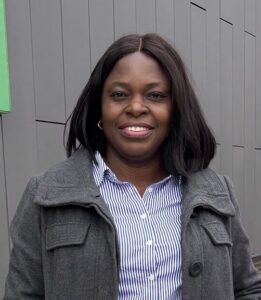
Dr Beatrice E. Ifie

Dr Beatrice E. Ifie is a Senior Research Fellow in Plant Breeding leading the Miscanthus Breeding Programme at the Institute of Biological, Environmental and Rural Sciences (IBERS), Aberystwyth University, where she applies innovative plant breeding technologies to accelerate genetic gains for improved yield, stress resilience, and quality traits. Her current research focuses on developing high-yielding, climate-resilient Miscanthus varieties to support sustainable agricultural systems. Her research focuses on advancing the understanding of Miscanthus biology, particularly by investigating the mechanisms underlying plant responses to abiotic stresses and diverse environments, to inform targeted breeding strategies. Beatrice has extensive university teaching experience and has played a key role in developing e-learning resources in Plant Breeding.

Dr. Jule Neumann

Jule is a marine chronobiologist and postdoctoral researcher at Aberystwyth University. Her research focuses on understanding how organisms keep track of time, with a particular focus on the influence of the tides and the moon on life in our oceans. She completed her PhD at the Max Planck Institute for Evolutionary Biology in Plön, after which an independent early-career fellowship brought her from northern Germany to Wales.

Hardik Harishchandra Patel

Hardik Harishchandra Patel is a PhD researcher in Biological Sciences at Aberystwyth University. His research focuses on lodging resistance in teff, with particular interest in stem biomechanics, lignin deposition and plant physiological responses. He has a strong academic background in plant breeding, genetics and crop improvement, with previous research experience in cotton and pulse crops. He is passionate about sustainable agriculture, innovative research methods and supporting the development of early career researchers through collaborative academic initiatives.

If you have any questions about the ECR Colloquium, please email us at researcherdevelopment@lsw.wales.ac.uk

Call for Abstracts (CLOSED)

The deadline for submitting abstracts has now passed. For the latest information and updates, please visit the website regularly.

We are now inviting abstract submissions for 3-minute Flash Talks and Research Posters.

We are inviting proposals that align with one of the Seven Well-being Goals of the Future Generations (Wales) Act 2015

We also encourage proposals that have an international scope to apply. If your research is being conducted outside Wales, you can refer to the United Nations’ 17 Sustainable Development Goals instead.

Research posters should be size A0 (84.1m x 118.9 cm) and use a portrait layout.

We encourage applicants to creatively present their research for an interdisciplinary or non-specialist audience.

Submission Guidelines

  1. Abstracts must be submitted by completing our online form.

  2. Proposals must be submitted in English or Welsh.
  3. Submissions will be reviewed by the Researcher Development Team and members of the Advisory Group for Researcher Development. 
  4. Applicants will be notified of the outcome before the end of April.
  5. If you are not selected for a flash talk, we will automatically consider your submission for a research poster.
  6. Successful applicants will be asked to submit any presentation slides and research posters ahead of the Colloquium.